

Your Soft Skills Are Already Telling a Story
How to turn daily work moments into stories that build connection + credibility

When I moved to New York in 2014, I had a physical folder filled with legal documents, an original diploma, and a transcript of records. I guarded that folder like my 401K depended on it.
I believed, with all my credentials as a knowledge worker from the University of the Philippines, I would be ready to conquer the corporate world.
Not at all, it turns out.
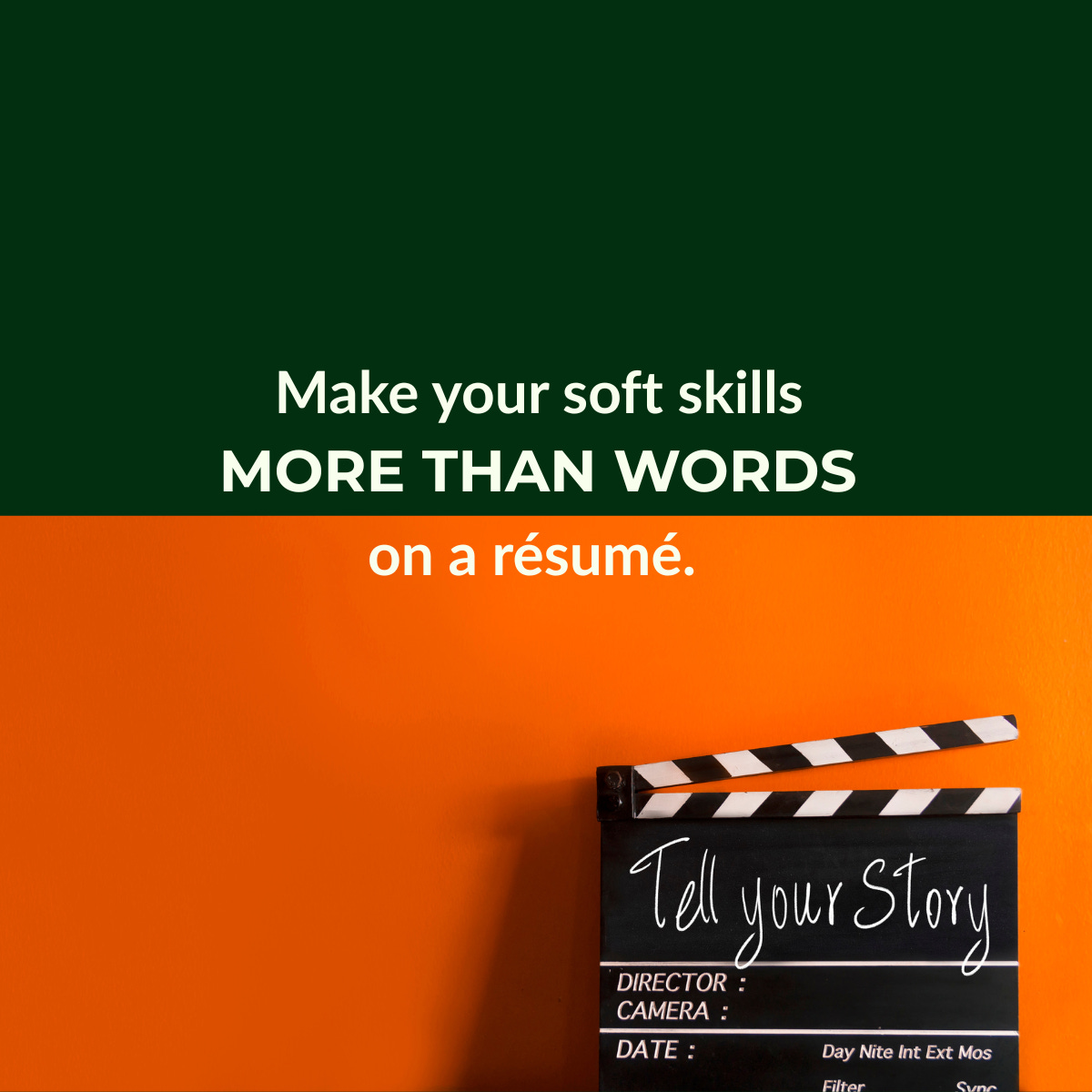
What I really needed was to learn how to share stories that showed my skills instead of just listing them. The soft skills I had learned in action mattered more than any bullet point on my résumé.
Those credentials meant little when they stayed on paper.
Doors did not open because of my degrees. They opened because of my stories.
They opened because I stayed up late helping a teammate fix a bug.
They opened because I learned something new under pressure.
They opened because of the quiet wins no one noticed.
Soft skills matter most when you show them, not when you simply say them.
No One Taught This About Soft Skills
No one gets promoted for saying, “I have emotional intelligence” during a performance review.
You get noticed because while others rushed to react, you paused long enough to think, to listen, and to steady the team back toward the goal.
You get remembered because you solved small things before they became big ones.
Someone across the world could feel your care in a message, or during those first few minutes of “how are you” before the daily stand-up starts.
Soft skills are not meant to be left sitting on a list of traits in your résumé or performance review form. They are the human side of competence, shown in how you listen, adapt, and lead through change.
The Framework That Changed How I Talk About My Work
Whenever I feel stuck on how to talk about what I’ve done, I go back to something I created for myself. I call it STAR-L.
S – Situation: Gives your story context
T – Task: Describes the challenge
A – Action: Shows what you did
R – Result: Explains what changed because of it
L – Lesson: Reveals what you learned and who you became
The following 4 stories show how it looks in action.
Story # 1. Adaptability
S - Situation: During a sprint, our client suddenly changed priorities and asked the team to add a new feature that required a tool none of us had used before.
T - Task: I needed to help the team understand the new tool and still deliver our original commitments on time.
A – Action: I spent a few hours exploring the tool, reading quick-start guides, and testing small configurations. I shared what I learned in our team channel and created a short how-to document so everyone could get up to speed faster.
R – Result: We met the deadline, and the client appreciated our flexibility without losing momentum.
L – Lesson: Adaptability is less about knowing everything and more about being willing to learn, share, and move forward together.
Story #2. Team Work
S - Situation: On one of our IT projects, we had developers and analysts across three time zones. Updates were getting lost, and tasks were duplicated because no one saw what others had finished.
T – Task: I needed to help the team stay connected and ensure smooth handoffs despite the distance.
A – Action: I suggested adding a simple “handoff update” message in our project tracker. It’s a quick note before logging off: what’s done, what’s pending, and what’s blocked. I modeled it myself and encouraged others to do the same.
R – Result: Within a few weeks, our communication improved, delays decreased, and we rarely missed follow-ups.
L – Lesson: Teamwork in tech is creating clear rhythms that help everyone in the project succeed.
Story # 3. Communication
S – Situation: Early in my IT career, I once wrote a long requirements document, thinking, including too many details would be doing my teammates a favor. But during testing, a developer misunderstood one section and built the wrong workflow.
T – Task: I needed to clear up the confusion and ensure everyone understood what was needed.
A – Action: I rewrote the document into shorter sections, added visuals, and scheduled a 15-minute walkthrough so everyone could ask questions directly.
R – Result: The next sprint ran smoothly, and my format became the new template for our documentation.
L – Lesson: Clear communication is validating your message was 100% understood.
Story # 4. Ownership
S – Situation: A few weeks before deployment, I noticed our system was processing requests differently than expected. No one had logged it as an issue, but something felt wrong.
T – Task: I needed to verify the issue, inform the team, and ensure it didn’t affect our launch date.
A – Action: I traced the workflow, took screenshots, and summarized what I found. During our stand-up, I shared the impact and volunteered to track the fix through testing.
R – Result: The issue was fixed before go-live, saving hours of rework. My manager later said it showed initiative and ownership.
L – Lesson: Taking ownership is stepping up when something needs attention (without being told or asked).
Your Story Will Win Over Buzzwords
Saying “I am a problem solver” is like saying “I breathe air.” Everyone does, at least on their LinkedIn bio.
When you tell a real story about that one time you had to take a 1:30 AM call for a status update (while feeding your crying baby), people can see your humanity and trust you more. That is how you become memorable. Stories build connection faster than a job description ever could.
How to Find the Stories Already Inside Your Work
Your best stories are already living in your day-to-day.
Ask yourself what moment taught you patience, courage, or compassion.
Think about the time you helped someone get through conflicting priorities.
Remember the huge mistake that made you better at your job.
Write them down.
The more you reflect, the more you will notice patterns. Those patterns are proof of your growth.
Turning Reflection Into Practice
Storytelling is mindfulness in motion.
Do not wait for the big wins. Capture the small ones, the unglamorous moments when you fixed something, helped someone, or simply logged in, despite fighting the urge to stay in bed all day.
Create a folder called “My Career Stories.” Each week, jot down one thing that taught you something. Over time, you will see yourself evolve into a stronger, wiser version.
Seeing Yourself With New Eyes
Writing your stories slows the world down just enough for you to see yourself clearly. It reminds you that every project, every interaction, and every irate client was about who you were becoming.
Paying attention helps you realize growth is you noticing more. Awareness is the quiet muscle that strengthens every skill you have.
Final Thoughts
You already have the soft skills. Now turn them into stories that feel real, engaging, and true to who you are.
Confidence begins not when you list what you know, but when you remember what you have learned. Then, share those lessons in interviews, networking, or everyday work conversations. That is how you show adaptability, teamwork, communication, and ownership in action.
You make your soft skills more than words on a résumé. You bring them to life.
If this resonated, subscribe to Mindful Tech Simplified. I share reflections, stories, and practical frameworks that help you strengthen your voice, grow in your career, and lead with awareness.
These are wise words.
What we do is so much more than what we say.
"Confidence begins not when you list what you know, but when you remember what you have learned."
And a good leader is watching for those rare soft skills in action.
If I was in the leader's shoes, I know who I'd promote....